

In the field of linear lighting, the housing of a linear light plays three roles simultaneously: structural support, heat dissipation channel, and aesthetic presentation. The light output quality, heat dissipation efficiency, and how well it harmonizes with a space depend heavily on the cross-sectional design and surface treatment of the aluminum profile.
Standard Linear Light Housings on the market come in relatively fixed specifications. When designers need a special beam angle, non-standard installation dimensions, or a metallic texture that matches the overall tone of a space, standard products often fall short. This is when Custom Linear Light Housing becomes the solution rather than just a fallback option.
Foshan Xingtaomei Aluminum Industry Co.,Ltd has collaborated with numerous lighting brands and design teams in the field of lighting profiles, handling a wide variety of custom requirements. The following breaks down this process, looking at the stages involved in turning a sketch into a housing that can be illuminated.
Step One: Clarify the Idea
Customization begins with communication. What the client needs to provide at this stage can be a CAD cross-sectional drawing, a hand-drawn sketch with key dimensions marked, or even a video of the installation location accompanied by written notes.
The core task is to ensure the manufacturer understands a few key pieces of information: where the housing will be used, which direction the LED strip will shine, whether it will be surface-mounted or recessed, and what expectations exist regarding the surface texture. This information is more important than the format of the drawing. An experienced Linear Light Housing Aluminum Profile Manufacturer can extract the direction for cross-sectional design from a description of the application scenario - what kind of light output structure is needed for a wall-washing effect, how large the installation recess needs to be, what kind of base fixing method is required for a surface-mounted housing.
At Xingtaomei Aluminum, the first priority upon receiving a custom request is to work with the client to clarify the requirements, rather than rushing to provide a quotation. The more thorough the communication, the less likely subsequent steps are to go off track.
Step Two: Cross-Section Design and Feasibility Assessment
Once the requirements are clear, the next step is cross-section design.
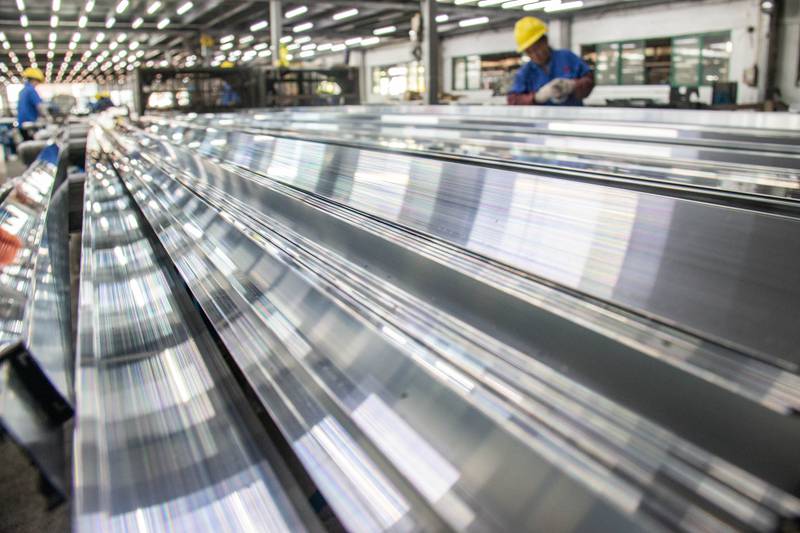
This stage is not just about "drawing out" the client's idea; more importantly, it's about assessing whether the cross-section is feasible in actual production. Aluminum profile extrusion has its own rules - wall thicknesses must transition reasonably, the flow rate of material through different parts of the die must be as uniform as possible, and functional structures must not interfere with one another. The cross-section of a single Linear Light Housing Aluminum Profile often needs to accommodate the LED strip slot, PC cover clip, heat dissipation structure, and bottom mounting slot all at once. The arrangement and combination of these elements require experience.
If certain design details could cause problems during actual production, the team at Xingtaomei Aluminum will offer adjustment suggestions at this stage. This is not a rejection of the design, but rather using manufacturing expertise to help the client avoid trial-and-error costs later on. Once the cross-section is confirmed, the plan and quotation are also clarified - mold cost, sampling lead time, and bulk unit price, each with clear breakdowns.
Step Three: Sampling and Verification
After the mold is fabricated, the sampling stage begins.
The factory first conducts a trial extrusion, producing an initial sample. After an internal self-inspection - checking whether the cross-sectional dimensions are within tolerance, whether the surface is smooth, and whether the clip fits correctly - it is sent to the client once confirmed. Upon receiving the sample, the client compares it in the actual installation environment: Do the dimensions match? Does the beam angle meet expectations? Does the surface texture coordinate with the surrounding environment?
If adjustments are needed, whether modifying cross-sectional dimensions or adjusting clip tightness, they are completed at this stage. Sampling is the most important verification milestone in the custom process. Spending a little more time at the sample stage means fewer surprises at the bulk production stage. Xingtaomei Aluminum is equipped with multiple extrusion presses of different tonnages, with dedicated small-tonnage lines for sampling. These samples do not need to compete for scheduling with large-volume orders, making the turnaround time for adjustments and re-sampling relatively manageable.
Step Four: Surface Treatment and Batch Production
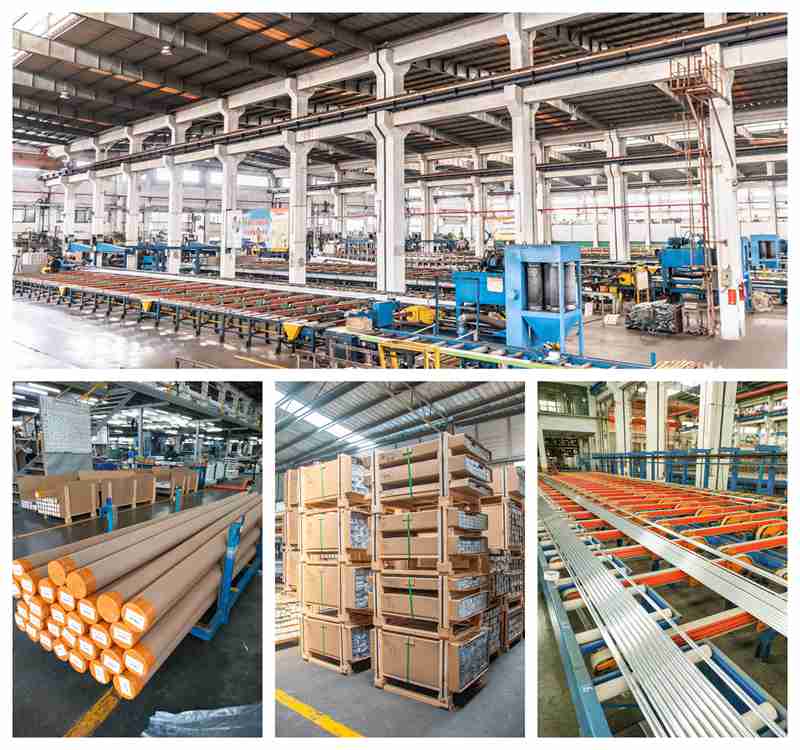
After the sample is confirmed, batch production begins. Extrusion and surface treatment proceed consecutively.
The surface texture of the Linear Light Housing holds a position equally important to cross-sectional design in customization. Xingtaomei Aluminum possesses a complete anodizing production line, capable of providing the linear light housing with a rich selection of metallic colors - from matte silver and brushed silver to champagne gold, bronze, and rose gold. Different tones and gloss levels of metallic texture can all be achieved through the anodizing process. The characteristic of anodizing is its strong color adhesion; the oxide film is essentially part of the aluminum itself, meaning it will not peel or flake under normal usage conditions, while retaining the natural metallic feel of the aluminum.
All surface treatment is completed in-house, without relying on outsourcing. This means more controllable delivery times and better assurance of color consistency from batch to batch. Standardized process parameters, retained color swatches for reference, and batch-by-batch comparisons during quality inspection - these systematic control measures ensure that the surface texture of every shipment remains consistent with the approved sample.
Step Five: Deep Processing and Delivery
After batch production is complete, deep processing is carried out according to client requirements.
Fixed-length sawing is the most basic process - cutting the profiles to specified lengths according to the luminaire specifications. Beyond this, end tapping and pre-drilling of mounting holes can also be completed before delivery. When the profiles reach the client, they are in a finished state ready to go directly into the assembly process, eliminating the need for arranging secondary processing independently.
Xingtaomei Aluminum is equipped with precision cutting, punching, and drilling equipment in its deep processing stage, capable of completing various machining operations according to drawing requirements. The company has passed ISO9001 quality management system certification and CQM certification. From extrusion and surface treatment to deep processing, the entire process has standardized inspection and record-keeping.
The Significance of Customization
The essence of Custom Linear Light Housing lies in turning requirements that standard products cannot meet into a profile that belongs exclusively to this project, through cross-sectional design and surface treatment. For lighting brands, customization means product differentiation in both appearance and performance. For designers, customization means the design language continues intact from the rendering all the way to implementation.
Foshan Xingtaomei Aluminum Industry Co.,Ltd has accumulated extensive experience in cross-section development and anodizing surface treatment processes in the field of lighting profiles. Whether you have complete design drawings in hand, or just an initial idea and sketch, you are welcome to discuss them with us. We have professional customer service online, ready to provide you with a clear pathway covering cross-section feasibility, surface treatment solutions, and sampling lead times, so that the linear light housing is no longer a compromise choice.